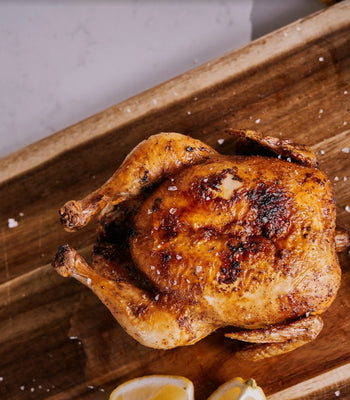
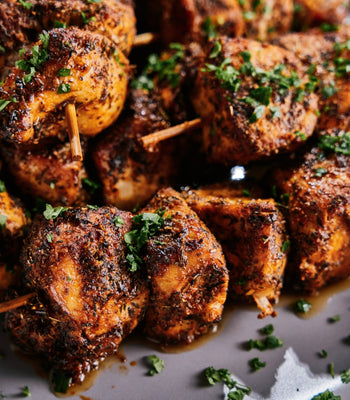
Both use hot air. Both promise crispy, evenly cooked food. And yet an air fryer and a conventional oven are different. Choosing between them, or knowing when to use each, makes a bigger difference in the kitchen than most people expect.
The decision comes down to three things:
- How fast you need to cook
- How much food you're making
- How you use your kitchen day to day
How To Choose: Quick Guide
An air fryer excels at fast, crispy results for smaller portions, while an oven is the better choice for volume, baking, and full-meal cooking.
Choose an air fryer if:
- You cook for 1–4 people most nights
- You prioritize speed and crisp results
- Counter space and energy use matter to you
Choose an oven if:
- You regularly cook for 7 or more people
- You already own a convection oven with an air fry mode
What Is an Air Fryer?
An air fryer is a compact countertop appliance that uses rapid air technology to circulate hot air at high speed around food in a small cooking chamber. Because the air fryer basket is compact and the airflow is intense, heat reaches food from all angles quickly and produces an even, crispy exterior.
Most air fryers range from 2–9 quarts in capacity, making them well-suited for small batches and everyday cooking. The convection-style heating means shorter preheat times and faster cook cycles than a standard oven.
What Is an Oven?
A conventional oven uses radiant heat—heating elements that warm the air inside the cavity that surrounds the food. Because the chamber is large and the heat is less directed, cooking times are longer and results can vary depending on rack position and where you place the pan.
A convection oven adds a fan to that equation. The fan circulates the hot air more actively, producing more even cooking and slightly faster results than without a fan. Convection heating brings it closer in performance to an air fryer, though the chamber size and airflow intensity still differ significantly.
Where ovens hold an advantage is in capacity. With multiple racks and the ability to fit large roasting pans or full sheet pans, they’re well suited for preparing large family meals, entertaining guests, and baking larger batches.

Air Fryer vs Oven: Side-by-Side Comparison
Air fryers heat up faster because of their chamber size. A smaller enclosed space heats up and maintains temperature more quickly than a full-size oven. Less volume means less energy needed to reach the target temperature, and less distance for heat to reach the food.
Airflow intensity increases that advantage. Even compared with a convection oven, the high-speed fan in an air fryer moves heat around the food far more aggressively. This airflow intensity drives the texture difference, particularly the crispier exterior.
| Feature | Air Fryer | Conventional Oven | Convection Oven |
|---|---|---|---|
| Preheat Time | 0–4 minutes | 10–15 minutes | 8–12 minutes |
| Cook Speed | Fast | Slow | Moderate |
| Crispiness | High | Moderate | Moderate–High |
| Capacity | 2–9 quart | Full cavity | Full cavity |
| Best For | Small batches, crispy foods | Large meals, baking | Versatile everyday cooking |
| Energy Use | Lower for small portions | Higher for small portions | Moderate |
| Cleaning | Easy (basket/drawer) | More involved | More involved |
Cooking Performance in Real Life
When choosing between an air fryer and a traditional oven, real-life cooking performance often comes down to what you’re making and how much you need.

Crispiness
For small, high-surface-area foods, the air fryer consistently delivers better texture. The basket design allows hot air to circulate underneath food as well as around it, which a sheet pan in an oven can’t replicate.
Batch Cooking
For larger quantities, the oven wins. A 4–5-pound chicken, a full sheet pan of roasted vegetables, or a casserole that feeds 7 people requires the oven's capacity. Trying to replicate those results in multiple air fryer batches is possible, but it adds time and effort that defeats the convenience advantage.
Energy Efficiency and Cost
For short cooking cycles and small portions, air fryers use less energy than ovens. The compact chamber reaches temperature quickly and maintains it efficiently, which means less total energy consumed per meal compared to preheating a full-size oven for the same job.
That advantage reverses when cooking large batches. Running a full oven for one meal is more efficient than running an air fryer through four consecutive batches to feed the same number of people.
The practical takeaway: If you primarily cook for 1–2 people, the air fryer is likely the more energy-efficient tool. For larger households, the oven's efficiency improves with portion size.
Explore Cosori's full range of air fryer sizes to find the right fit for your kitchen.
FAQ
Can an air fryer cook healthier food than an oven?
Neither appliance makes food healthier; that depends on the ingredients. Air fryers produce crispy results with less added oil than deep frying, but an oven and an air fryer are roughly equivalent when preparing the same recipe.
Can an oven replace an air fryer?
A convection oven with an air fry mode can approximate results, especially for large batches. However, for dedicated crispiness and faster preheat times, a standalone air fryer typically outperforms oven modes.
Is air fry mode the same as an air fryer?
Not exactly. Oven air fry mode uses a convection fan at higher intensity, but the larger cavity means longer preheat times and less intense airflow compared to the concentrated chamber of a dedicated air fryer.
Which one uses less electricity?
For small portions, the air fryer wins. For large meals that fill the oven, energy use per serving favors the oven. Portion size is the key variable.
Can I convert oven recipes for an air fryer?
Yes. Because air fryers cook faster at concentrated heat, most recipes benefit from a lower temperature and shorter cook time. Refer to your Cosori recipe book for specific guidance.
The information provided here is for informational and educational purposes only and should not be used in medical emergencies or for diagnosing or treating any medical condition. It's crucial to consult a licensed medical professional for diagnosis and treatment. External links are for informational purposes and do not constitute endorsements. No warranty of any kind, either expressed or implied, is made as to the products and/or the accuracy, reliability, timeliness, or correctness of the information provided herein.